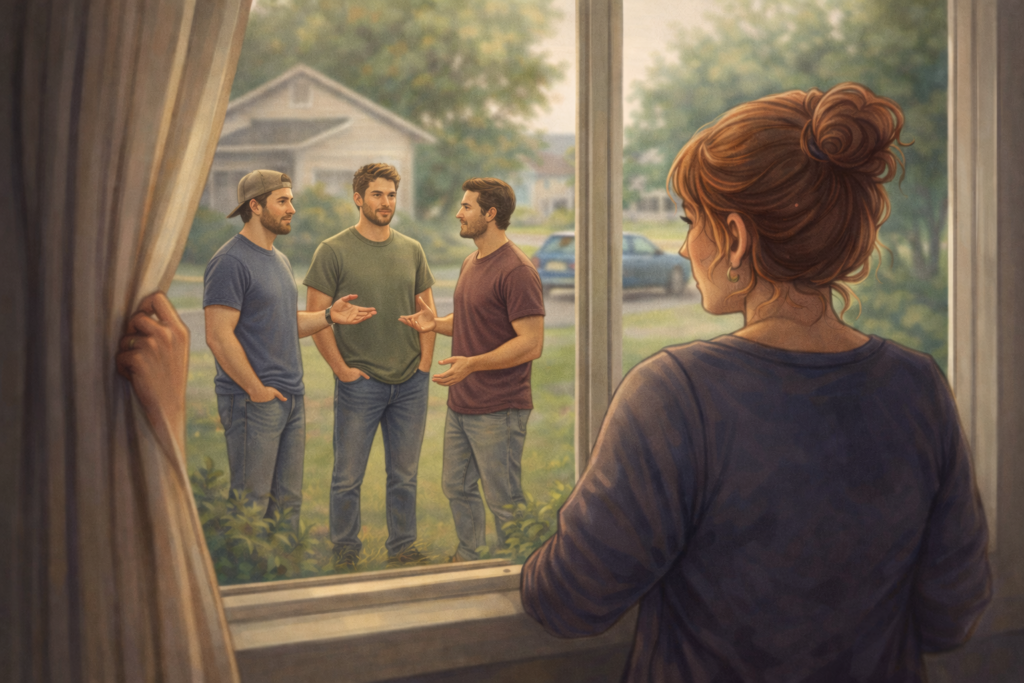
When that’s not the story you imagined
There’s a particular version of motherhood I thought I understood – because I lived it from the other side.
For most of my adult life, my mom was an everyday presence. We lived together or close to each other for decades. She knew my routines, my moods, my rhythms. She was part of the ordinary moments – not just the big milestones. I could call her, stop by, share life in real time. She wasn’t just my mom; she was woven into the fabric of my daily existence.
So when I imagined my own future with my kids, I pictured something similar. Not control. Not hovering. Just closeness. Familiarity. Being part of the everyday.
That’s not how this chapter turned out.
The Quiet Reality of an Empty Nest
People talk about empty nest syndrome like it’s mostly about the house – the quiet rooms, the lack of noise, the absence of schedules.
What they don’t talk about as much is the emotional disorientation.
When your kids grow up and move into their own lives, you don’t just lose activity – you lose relevance in the way you once knew it. Your role changes without asking your permission. The center of gravity shifts.
And suddenly, you’re standing in a version of motherhood that feels unfamiliar.
When Love Is Still There, But Access Has Changed
My kids are grown. They’re figuring out who they are and what they want. They still want a relationship with me – and that matters more than I can say.
But the closeness I imagined doesn’t exist in the same way.
There’s more distance.
More independence.
More emotional caution.
Some of that is exactly what’s supposed to happen when kids become adults.
And some of it, if I’m honest, has roots in my past.
Holding the Reality of Addiction Without Living in Shame
There were mistakes made when my kids were growing up.
Addiction was part of my life then. Recovery has been part of my life for years now – but recovery doesn’t erase impact. Some of the consequences still live inside my relationships with my kids.
That’s something I carry carefully.
Not with constant guilt.
Not with denial.
But with responsibility.
I know there were moments when my kids felt abandoned or unsafe – and that cuts deep, because I knew exactly what that felt like growing up, and I never wanted to pass it on.
And yet… life happened the way it happened.
Owning that truth doesn’t mean punishing myself forever. It means understanding why closeness might come with hesitation now – why trust rebuilds slowly, why emotional distance can be a form of self-protection rather than rejection.
Healing Doesn’t Automatically Restore Intimacy
One of the hardest things to accept is that being well now doesn’t automatically heal everything that was hurt then.
I’m grounded. Stable. Present in ways I couldn’t always be before. Naturally, there’s a part of me that wants to make up for lost time – to be more involved, more woven into my kids’ lives.
But I’ve learned that healing doesn’t give you the right to rush someone else’s process.
My kids still want the relationship. They just hold it more carefully. And that makes sense.
Respecting that – even when it’s painful – is part of loving them well in this season.
Learning How Not to Chase Connection
There’s a temptation to close the distance by force.
More texts.
More emotional checking.
More reassurance-seeking.
But connection that’s pressured doesn’t feel safe.
So instead, I’m learning how to stay available without crowding. To be consistent without being intrusive. To trust that showing up steadily matters more than showing up loudly.
That kind of restraint doesn’t come naturally to me.
But it comes from love – not fear.
Redefining What Motherhood Looks Like Now
Motherhood in this chapter doesn’t look like proximity.
It looks like patience.
Like honoring autonomy.
Like allowing space without interpreting it as loss.
It looks like understanding that my kids are not meant to recreate the relationship I had with my mother – even if that’s the model I knew.
That realization has been both humbling and freeing.
A Different Kind of Ending
Sometimes I think about how intertwined my life was with my mom’s – how present she was in my everyday world – and I feel the ache of wanting that kind of closeness with my own kids.
And sometimes, I recognize that love doesn’t have to mirror itself across generations to be real.
I can hold grief for what I imagined and acceptance for what is. I can honor the past without trying to recreate it. I can love my kids fully, even when the shape of that love looks different than I expected.
This chapter isn’t about fixing anything or forcing the future.
It’s about standing where I am – loving without gripping, showing up without crowding, and learning how to be a mother in a season that asked me to let go of control and trust something quieter.
And for now, that’s enough.